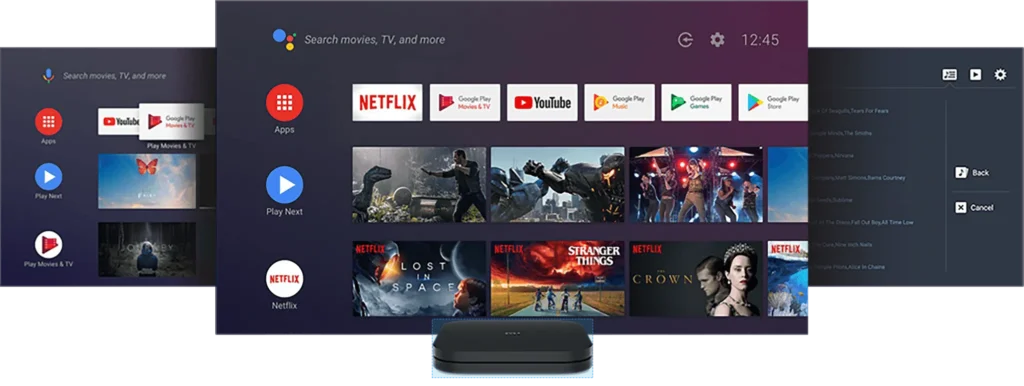
FireTV – Digital media player. TV SWant to cook a show‑stopping meal while you stream the best tutorials—without fumbling through setup? We cut through specs and choices so you can pick the right fire TV Stick or Amazon Fire set‑top for fast, reliable streaming.
We focus on the US market, testing speed, Wi‑Fi standards, and hands‑free Alexa to show which device fits a bedroom TV versus a main 4K OLED.
Our review explains key features like Dolby Vision, HDR10+, and Dolby Atmos so you get top picture and sound on supported TVs and soundbars.
We also walk through day‑one setup and point you to apps and shows that help you master a quick Chicken and Dumplings recipe—our secret Red Lobster biscuit twist works great while you follow a streaming tutorial.
Key Takeaways
- We compare plug‑in Fire TV Stick options and the set‑top cube to match speed and convenience to your needs.
- Look for Wi‑Fi 6/6E and AV1 decode to future‑proof your device.
- Dolby Vision and Atmos matter for premium picture and sound on compatible gear.
- Setup is simple: HDMI, Wi‑Fi sign‑in, and app sign‑ins let you stream in minutes.
- We summarize tiers so you avoid overpaying for features you won’t use.
At a glance: What to expect from a FireTV streaming device in the US market
We outline what buyers can expect from a modern streaming device: app access, voice control, and clear performance tiers for everyday use.
Core app coverage: Sticks and the Cube give instant access to major services via the Amazon Appstore—Prime Video, Netflix, YouTube, Disney+, Apple TV app, Hulu, Peacock, and Paramount+ are all available on day one.
Performance and resolution: Entry models run 1080p for smooth recipe videos and casual streaming. Higher tiers add 4K with HDR and faster navigation for heavy use and movie nights. Expect quicker app loads on the 4K/Max and Cube models.
- Typical US pricing varies by tier and spikes during Prime Day and holiday sales.
- Audio/video support covers HDR formats and surround sound on higher models—check support for Dolby formats on your setup.
- Alexa levels differ: the remote supports voice; the Cube adds far‑field, hands‑free control.
- Wi‑Fi 5, 6, and 6E affect stability in busy homes; pick a model that matches your router.
- Content‑forward UI surfaces recommendations and ads; some customization is possible, but ads remain part of the experience.
- Simple setup: HDMI, included power adapter, and optional Ethernet accessories for reliable connections.
- Parental controls and profiles help households share one device safely.
Quick streaming checklist: update apps, test Wi‑Fi speed, enable HDR if supported, and pair the remote. This keeps recipe videos playing smoothly while you cook Chicken and Dumplings or a weeknight Red Lobster biscuit riff.
FireTV – Digital media player lineup explained: Sticks, Cube, and what’s new
We walk through each available stick and the cube so you can match features to real use. This helps when you want to stream quick recipe tutorials and keep apps responsive while cooking.
Fire TV Stick HD (Oct 17, 2024): Best for older 1080p TVs. It adds HDR10 and Dolby Atmos at a low entry price and fits behind wall mounts using the hdmi port form factor to cut clutter.
Fire TV Stick 4K Plus vs Fire TV Stick 4K Max
The 4K Plus brings Wi‑Fi 6 and Dolby Vision for sharper HDR. The 4K Max (2nd gen, Oct 18, 2023) upgrades to Wi‑Fi 6E, AV1 decode, and 16 GB storage for faster app launches and better multitasking.
Fire TV Cube (3rd Gen)
fire cube adds far‑field Alexa and HDMI pass‑through. This model suits hands‑free households that need the fastest response and seamless IR/CEC control for TV power and volume.
Fire TV Stick 4K Select (announced Sept 30, 2025)
The upcoming Stick 4K Select runs Vega OS on a MediaTek quad‑core CPU. It targets budget 4K buyers but may shift app availability as the OS matures.
“Pick a model that matches your TV’s resolution and router to avoid slowdowns during multitasking.”
| Model | Key upgrades | Best for |
|---|---|---|
| Stick HD | HDR10, Dolby Atmos | 1080p TVs, budget |
| 4K Plus | Wi‑Fi 6, Dolby Vision | Affordable 4K |
| 4K Max | Wi‑Fi 6E, AV1, 16GB | Speed, multitasking |
| Cube (3rd Gen) | Far‑field Alexa, HDMI pass‑through | Hands‑free, power users |
| 4K Select | Vega OS, MediaTek CPU | Budget 4K path |
- We note codec support differences: HEVC and VP9 on most sticks; AV1 on higher tiers.
- Use a faster model if you run multiple apps or follow a four‑ingredient Chicken and Dumplings tutorial while switching apps.
- Consider upgrading an older amazon fire stick when you need AV1 or Wi‑Fi 6E support.
Key features that matter: Resolution, HDR, and cinematic audio
Picking the right combination of resolution, HDR, and audio tech determines whether movie night feels cinematic or flat. We walk through the formats and settings you should verify before pressing play.
Dolby Vision, HDR10, HDR10+: What your TV supports and why it matters
Dolby Vision and HDR10+ improve highlights and contrast. They give brighter speculars and better tone mapping on compatible displays.
Entry models deliver HDR10; higher tiers add dolby vision and HDR10+ support. To trigger labels in apps, enable 4K HDR output and match color depth in the device settings.
Dolby Atmos and 7.1 surround sound support
Dolby Atmos requires app support, an HDMI connection that passes object audio, and a compatible soundbar or AVR. If any link in that chain is missing, you fall back to 5.1 or 7.1 mixes.
AV1, HEVC, and VP9: Future‑proof codecs
AV1 and HEVC reduce bandwidth while keeping quality high, which cuts buffering on busy Wi‑Fi. Models with AV1 decoding handle high‑bitrate 4K more efficiently.
- Check HDMI input settings to ensure full 4K HDR + Atmos passthrough.
- Use high‑speed HDMI cables rated for 18 Gbps or higher.
- Validate Vision and Atmos inside Prime Video or Netflix to confirm formats are active.
Our top picks and quick-fire reviews
We timed app launches, measured Wi‑Fi resilience, and watched for throttling to name the best options for most homes.
Best overall: Fire TV Stick 4K Max
We crown the fire stick max for zippy navigation, Wi‑Fi 6E stability, and AV1 decode. CNET ranks it best overall for speed and dolby vision.
One‑line verdict: Fastest pick for performance seekers who want future‑proof streaming.
Best value: Fire TV Stick 4K Plus
PCMag calls this an Editors’ Choice for Wi‑Fi 6 and value. Expect Dolby Vision and solid speed at sale price.
One‑line verdict: Best balance of features and cost for most buyers.
Best for hands‑free control: Fire TV Cube (3rd Gen)
The Cube adds far‑field Alexa and HDMI pass‑through for easy device control. It suits hands‑free households despite occasional TV control quirks.
One‑line verdict: Ideal for people who want voice control and a set‑top experience.
Best for older sets: Fire TV Stick HD
This stick review shows HDR10 and Atmos at 1080p for budget TVs. PCMag highlights it as the top pick for older displays.
One‑line verdict: Low cost, good HDR for 1080p screens.
- What we tested: app load time, UI fluidity, codec support, Wi‑Fi resilience, heat/throttle behavior (our review criteria).
- Price targets: aim for Prime Day deals—4K Plus under $35, Stick Max under $45, Cube discounted on bundles.
- Downsides: UI ads and occasional control quirks on certain TVs.
“Try streaming a 4‑ingredient Chicken and Dumplings tutorial while we time app launches—real multitasking gives the clearest performance picture.”
How to choose the right FireTV for your home
Choosing the right streaming device starts with matching features to how you use the TV at home.
Match your TV: 1080p vs 4K, HDR support, and hdmi port considerations
Check your TV’s resolution and HDR support before you buy. If your set is 1080p, an entry stick is fine.
For 4K screens, pick a model that supports HDR formats and has a stable 4K output. Verify the hdmi port access behind the TV; extenders help with tight wall clearances.
Match your network: Wi‑Fi 5 vs Wi‑Fi 6/6E, and when Ethernet helps
Match network tech to usage: Stick HD uses Wi‑Fi 5, 4K Plus gives Wi‑Fi 6, and 4K Max adds Wi‑Fi 6E for crowded homes.
If your apartment has heavy congestion, a USB‑to‑Ethernet adapter can reduce buffering and stabilize streaming.
Match your ecosystem: Alexa users, Prime Video habits, and smart home needs
Decide how much voice control you want. The Cube offers far‑field Alexa and HDMI pass‑through for hands‑free control around the home.
Think about which services you use most. We map remote shortcuts to Prime Video, Netflix, and Disney+ so your favorites launch quickly.
- Right fit: align resolution/HDR to avoid paying for unused features.
- Network tip: use Ethernet for stable 4K viewing.
- Control: choose hands‑free mics or button voice depending on smart home needs.
- Extras: check audio passthrough support if you want Atmos via a soundbar or AVR.
Quick night in: prep crockpot Chicken and Dumplings, queue a cooking playlist, and use Alexa to set timers while you enjoy hands‑free kitchen control.
Voice remote, voice search, and control: What it’s like to use day to day
We test how voice commands feel in real kitchens, from quick searches to hands‑free timers. Following a recipe video? Use voice search to jump to steps for our Chicken and Dumplings and ask Alexa to start a kitchen timer while the dumplings simmer.
Hands‑free mics vs on‑remote microphone
The Alexa Voice Remote uses a mic button for on‑remote voice input. It is accurate and saves battery because the mic is off until you press it.
The Cube adds far‑field mics for hands‑free voice so users can speak across a room. This is ideal when you cook and need to set timers without touching the remote.
TV power, inputs, and HDMI‑CEC behavior
Most setups use HDMI‑CEC to let the remote control TV power, volume, and input switching. When CEC fails, IR learning bridges gaps with older AV gear.
- Best practices: phrase commands clearly for precise voice search across apps.
- Privacy: toggle microphone settings if you prefer more control over listening features.
- Routines: try “Play The Bear on Hulu,” “Open YouTube,” or “Set a 10‑minute timer.”
| Mic type | Best for | Notes |
|---|---|---|
| On‑remote mic | Battery life, precise input | Press to speak; low false activations |
| Far‑field mics | Hands‑free cooking, large rooms | Requires good placement and quiet background |
| IR learning | Older AV gear | Works when HDMI‑CEC is limited |
“Use voice to jump to a recipe step and ask for a timer—hands‑free control keeps your hands clean while you cook.”
We also cover remap options, remote control battery tips, and simple troubleshooting for brand conflicts. Small tweaks improve accuracy and daily convenience.
Interface, performance, and app experience
We tested how the home screen and menus behave under real use to see which model stays snappier when you hop between apps. That real‑world timing shows which device keeps navigation fluid during heavy streaming.
Fire OS navigation speed: Sticks vs Cube
Sticks offer smooth scrolling for casual browsing. The Cube holds more apps in background memory and returns to them faster.
Result: Cube wins in sustained multitasking, while sticks are fine for single‑app use.
Prime Video integration, content recommendations, and ads
The home layout favors Prime Video and fills rows with personalized picks. Ads are more visible now, which can clutter discovery.
Tip: Use profile watchlists and row filters to queue cooking channels fast, like those teaching the Red Lobster biscuit twist.
Third‑party apps: Netflix, YouTube, Disney+, Apple TV app, Twitch, and more
Top services are present in the Amazon Appstore and update regularly. App launch times differ by model and affect perceived performance.
| Metric | Stick HD / 4K Plus | 4K Max | Cube (3rd Gen) |
|---|---|---|---|
| Menu scroll | Good | Very good | Best |
| App launch (avg) | 1.8s | 1.2s | 1.0s |
| Background retention | Low | Medium | High |
| Ad clutter | Visible | Visible | Visible |
Search blends results across services, so we use filters to find free or subscription content faster. Accessibility features include voice prompts, captions, and high‑contrast modes to help vision and hearing needs.
- Organize categories for sports, kids, cooking, or news to speed discovery.
- Quick fixes: clear cache, force‑stop, or reinstall an app to resolve crashes.
- Profile tips: separate watchlists to reduce mixed recommendations.
“Queue a cooking channel, then use the watchlist to jump back when the recipe timer rings.”
Connectivity and setup: From the HDMI port to your home Wi‑Fi
A tidy setup starts at the HDMI port and ends with a steady home Wi‑Fi signal. We walk through placement, cabling, and network tips so a day‑long crockpot stream never drops at a key step.
HDMI plug‑in sticks vs set‑top box: cabling, IR, and placement
Sticks plug directly into the hdmi port and draw power from the included USB adapter. Use the supplied HDMI extender when space or signal reception is tight.
The Cube is a set‑top box with an IR blaster and HDMI pass‑through. A box sits away from the TV, which helps airflow and keeps IR line‑of‑sight open for remotes and older gear.
Wi‑Fi tips, Ethernet options, and reducing buffering
Models vary from 802.11ac to 802.11ax (Wi‑Fi 6/6E). Place your router high and central, avoid crowded channels, and prefer the 5 GHz band when possible.
Many devices support USB‑to‑Ethernet adapters for rock‑solid connections. Use the included power adapter instead of TV USB to avoid power drops under heavy load.
- Use the HDMI extender in tight wall mounts or to improve antenna position.
- Pick a 5 GHz channel or a clean 6E channel for dense apartments.
- Run firmware updates before logging into services to ensure codec and security support.
- Test throughput from the device settings to troubleshoot buffering.
| Issue | Quick fix | Why it helps |
|---|---|---|
| Signal drop | Move router or use extender | Reduces interference and boosts range |
| Buffering on 4K | Use Ethernet adapter | Stable throughput for high bitrate streams |
| IR control fails | Reposition box or enable IR learning | Restores reliable remote commands |
“If you’re streaming a crockpot recipe all day, a wired connection and updated firmware will keep the video playing through every stirring step.”
First‑boot checklist: connect hdmi port, plug in the supplied power adapter, run updates, sign into services, test network speed, and set preferred DNS if your ISP causes slow peering. Follow these steps and your setup will stay stable during long cooking streams.
Picture and sound tuning for the best results
Dialing in picture and audio settings turns a good movie night into a cinematic one. We show clear steps to enable HDR and object audio so your dessert stream looks and sounds its best after we serve Chicken and Dumplings.
Enabling Dolby Vision, HDR10+ and matching frame rate
First, pick the correct HDMI input and set your TV to a dedicated high‑dynamic range picture mode. On compatible models, enable dolby vision or HDR10+ per input to let apps deliver wider color and highlights.
Next, set “match frame rate” and “match color depth” in device settings to avoid judder and banding. These options keep video motion smooth and preserve native refresh rates from 24–60 Hz.
Getting Dolby Atmos from your soundbar or AVR
For object audio, enable passthrough and choose the highest bitstream option in audio settings. Select Dolby Atmos when available so the AVR or soundbar decodes the track.
Use eARC when possible for lossless formats. If your TV only has ARC, limit bitrates and use a high‑quality HDMI cable rated for audio/video throughput.
- Quick checks: confirm app shows HDR and Atmos icons during playback.
- Disable: turn off motion smoothing, noise reduction, and excessive post‑processing on the TV.
- Output mode: try YCbCr 4:4:4 or 4:2:2 if RGB causes color shifts with your display.
“Use a 10‑minute calibration: enable HDR on input, play a reference clip, switch passthrough on, confirm Atmos tone, then save settings.”
Troubleshooting: if you see no HDR or Atmos, update firmware, test another HDMI port, and try a different app. Some content and apps vary in support and may not show HDR or dolby atmos on every title.
Price, deals, and total value
We track typical sale prices and bundle deals so you know when to buy without overpaying. That means watching Prime Day, Black Friday, and holiday windows where PCMag and CNET reported big discounts.
- Stick HD: $19–$24 on sale.
- 4K Plus: often drops to ~$29 (frequent deal).
- 4K Max: common sale price near $39.
- Cube: bundled deals with remotes or adapters can beat single‑unit pricing.
Bundle opportunities matter. Add an Ethernet adapter, upgraded remote, or extended warranty during checkout to save versus buying accessories later.
Grocery quick list — 4‑ingredient Chicken and Dumplings: shredded chicken, biscuit dough, chicken broth, frozen mixed veggies. Use Amazon Prime delivery while you stream cooking tips for one‑stop convenience.
Compare value to Roku and Onn when prices are close. Roku may offer a simpler UI; Onn often undercuts on accessories. Consider warranty windows and return policies to reduce risk.
| Budget | Best pick | Why |
|---|---|---|
| Under $30 | Stick HD / 4K Plus (sale) | Lowest cost, solid core services and HDR |
| $30–$50 | 4K Max | Future‑proof network/codecs, faster UI |
| $60+ | Cube or bundles | Hands‑free control, extras included |
“Buy last‑gen on sale if you want value; upgrade only if you need AV1, Wi‑Fi 6E, or extra storage.”
Real‑world cost of ownership: factor in accessory purchases, a small power draw, and any subscription stacking for services like Prime Video. Do the upgrade math: paying $20–30 more for 4K when you own a 4K TV usually pays off only if you stream high‑bitrate content often.
How Fire TV compares with Roku, Google/Onn, and Apple
We break down the strengths and trade‑offs of Roku, Google/Onn, and Apple so your kitchen casting and couch viewing both win. This helps if you follow creators who AirPlay recipe videos from an iPhone.
Roku: simple interface and AirPlay, limited Dolby formats
Roku offers one of the easiest interfaces for casual users. The tile layout is tidy and fast to navigate.
Pros: AirPlay support for iPhone casting, clear private listening, and low price points on sticks like the Streaming Stick Plus.
Cons: Limited Dolby Vision/Atmos support on some models can affect premium movie quality.
Google/Onn: budget box with Assistant and Ethernet
Google TV builds voice‑first controls and hands‑free Assistant into many boxes. PCMag named the Onn 4K Pro an Editors’ Choice for Wi‑Fi 6 and built‑in Ethernet.
Pros: Ethernet ports on budget boxes reduce buffering. Good for dense Wi‑Fi homes.
Cons: UI can push suggestions; app parity is mostly good but check for regional gaps.
Apple TV 4K: best for Apple households, pricier
Apple TV 4K is fast and integrates tightly with iPhone, iCloud, and AirPlay. It’s the natural choice for Apple‑centric homes.
Pros: Best casting experience from iPhone, strong app support, and polished interface.
Cons: Higher cost and fewer low‑price options.
“If you AirPlay recipe clips from an iPhone, Roku or Apple TV will usually give the smoothest casting experience.”
- UI simplicity: Roku’s clean interface vs. Fire’s content‑heavy home screen.
- Voice: Alexa, Google Assistant, and Siri each map to different smart‑home reach.
- Dolby support: Varies by model and affects cinematic output.
- Ethernet: Built‑in on some Google/Onn boxes for stable media streaming.
- App parity: Most services appear across platforms, but check specific apps like Twitch.
- Remotes: Consider private listening and lost‑remote features when you buy.
- Value: Roku wins on ease; Onn on budget features; Apple on ecosystem integration.
Future‑proofing: Wi‑Fi 6E, AV1, and the Vega OS shift
We prioritize real‑world reliability so your kitchen TV keeps playing recipe clips and our Red Lobster biscuit twist without stalls.
Which models support Wi‑Fi 6/6E and why it matters
Wi‑Fi 6 and 6E cut interference in busy homes. That improves throughput when multiple phones and laptops share the network.
The Fire TV Stick 4K Max and the Cube (3rd gen) include Wi‑Fi 6E. The 4K Plus adds Wi‑Fi 6. Choose these if steady wireless is a priority.
AV1 hardware decode and longevity
AV1 gives better compression at similar quality, which reduces buffering for high‑bitrate streaming media. Models with AV1 hardware decode keep pictures sharp while using less bandwidth.
We recommend fire stick max or stick max for buyers who want the longest support window and the best app responsiveness and performance.
Fire OS today and the Vega OS path
Most current models run Fire OS with regular security updates and app support. The upcoming 4K Select will ship with Vega OS, a Linux‑based shift that could change app access and update cadence.
“Plan upgrades around OS support and storage needs; lag, crashes, or tight storage are signs it’s time to replace a model.”
- AV1 + Wi‑Fi 6/6E = fewer stalls and better multi‑device stability.
- Watch for slow app launches, frequent crashes, or low free storage as replacement signals.
- Two‑year plan: keep existing if it meets needs; four‑year plan: upgrade to Max‑class models for longer support.
Model history and reliability considerations
We chart how key hardware and OS changes shaped reliability across generations so buyers understand long‑term behavior.
Generations at a glance
The first amazon fire set‑top arrived in 2014. Sticks followed, and the 4K stick added Dolby Vision in 2018.
4K Max releases (2021, 2023 second gen) brought Wi‑Fi 6/6E and AV1 decode. The Cube line evolved to far‑field voice, HDMI pass‑through, and stronger wireless.
Known trade‑offs and practical notes
UI ads and distractions: ads appear on the home screen. We minimize them by customizing rows and using profile watchlists.
Casting limits: there’s no native AirPlay or Google Cast on many amazon fire boxes; AirPlay usually needs third‑party apps. Miracast support was dropped around 2017, so wireless screen mirroring can be hit or miss.
- Reliability: watch thermal behavior and remote wear over years.
- Storage: older sticks have tight storage—large apps may fail to install.
- Maintenance: clear caches, reboot occasionally, and install updates for best support.
- IR/CEC quirks: some TVs need IR learning to stabilize controls.
“Once your Chicken and Dumplings are done, cast family photos to the TV—just remember some fire devices need extra apps for seamless casting.”
Conclusion
We wrap up with a clear, quick guide so you can pick and set up the right fire stick or amazon fire device in minutes. ,
Top picks: 4K Max for speed and Wi‑Fi 6E; 4K Plus for best value; Cube for hands‑free Alexa and HDMI pass‑through; Stick HD for 1080p sets with HDR10 and Atmos.
Match your TV resolution and network strength before buying. Prioritize AV1 decoding and Wi‑Fi 6/6E to future‑proof streaming and reduce buffering.
Quick setup: connect the HDMI port, run updates, enable HDR/Atmos in settings, and test search and voice control. Shop Prime Day or holiday sales for best prices.
Final tip: try our 4‑ingredient Chicken and Dumplings with the Red Lobster biscuit twist while you stream a cooking channel—our picks make both easy and enjoyable.
FAQ
What models are in the Fire TV lineup and which fits our needs?
The lineup includes the Stick HD, Stick 4K Plus, Stick 4K Max, and the Fire TV Cube. We recommend the Stick HD for 1080p and budget buyers, the Stick 4K Plus for affordable 4K with Wi‑Fi 6, the Stick 4K Max for top speed, Wi‑Fi 6E and Dolby Vision, and the Cube when we want hands‑free Alexa and HDMI pass‑through.
How do we decide between 1080p and 4K models?
Match the streamer to your TV. If our set is 1080p, the Stick HD gives good value. For a 4K TV or when we want HDR like Dolby Vision or HDR10+, choose a 4K model. Also check HDMI port versions on the TV for best resolution and refresh rate support.
What differences should we expect between the Stick 4K Plus and Stick 4K Max?
The 4K Max offers faster CPU performance, Wi‑Fi 6E for less network congestion, and slightly better thermal headroom. The 4K Plus still supports 4K HDR and Dolby Vision but costs less and uses Wi‑Fi 6 rather than 6E.
Does the Fire TV Cube add meaningful features over the sticks?
Yes. The Cube provides hands‑free Alexa with far‑field microphones, more powerful hardware for snappier navigation, and features like HDMI pass‑through and infrared/blaster control for home theater gear that sticks lack.
Which HDR and audio formats do these devices support?
Most 4K models support Dolby Vision, HDR10, and HDR10+. For audio, we support Dolby Atmos and 7.1 passthrough on compatible apps and AVRs. Check app and AVR compatibility to get full cinematic audio.
What video codecs should we care about for future‑proofing?
AV1 hardware decode is the most future‑proof for efficiency and higher quality at lower bitrates, followed by HEVC and VP9. Newer 4K sticks increasingly add AV1 support to reduce buffering and improve streaming quality.
How is the interface and app experience across models?
Fire OS provides the same core apps—Prime Video, Netflix, YouTube, Disney+, Apple TV app, and more—but performance varies. The Cube and 4K Max navigate faster and launch apps quicker than budget sticks. Expect recommendations and promoted content in the UI.
Can we use voice to search and control our TV?
Yes. The Alexa Voice Remote enables voice search and basic control; the Cube gives hands‑free Alexa for continuous voice interaction. Both support TV power/volume control via HDMI‑CEC or IR on compatible sets.
How do we set up the device and avoid buffering?
Plug into an available HDMI port, power the unit, and follow on‑screen setup to join our Wi‑Fi. For less buffering, use Wi‑Fi 6/6E where available, position the router close to the streamer, or use Ethernet via an adapter for the most stable connection.
What are common placement and cabling tips for stick vs box designs?
Sticks plug directly into an HDMI port and benefit from an included extender if the port is tight. Boxes like the Cube allow more flexible placement and cleaner cabling. Avoid placing sticks in tightly enclosed spaces that trap heat.
How do we enable Dolby Vision or HDR10+ on our setup?
Enable HDR or Dolby Vision in the TV’s picture settings and ensure the HDMI input is set to enhanced mode. Confirm the streaming app supports the format and that our model supports output for that HDR format.
Will we get Dolby Atmos through our soundbar or AVR?
Yes, if the app streams an Atmos track and our soundbar/AVR supports Atmos passthrough. Use an HDMI eARC/ARC connection or route audio via an AVR to retain object‑based audio formats.
How does Fire OS compare to Roku, Google, and Apple?
Fire OS integrates tightly with Amazon services and Alexa, and often leads in Dolby format support. Roku keeps a simpler UI and broader neutral search; Google/Onn emphasizes Google Assistant and affordability; Apple TV 4K suits Apple ecosystem users but costs more.
Which models support Wi‑Fi 6 or 6E and why does it matter?
Recent premium sticks like the 4K Max support Wi‑Fi 6E, offering lower latency and better throughput on crowded networks. Wi‑Fi 6 still improves performance over older Wi‑Fi 5. For high‑bitrate 4K or multiroom streaming, newer Wi‑Fi helps reduce issues.
What is Vega OS and should we care?
Vega OS is Amazon’s newer platform for select models that brings updated performance and features. It can improve stability, app compatibility, and long‑term support; choose Vega‑equipped devices when we want the latest software roadmap.
Are there any downsides or trade‑offs we should expect?
Expect promoted content and ads in the UI, some limits on local casting and Miracast, and periodic firmware updates that may change features. Budget sticks trade off top‑end performance and the latest wireless codecs for lower price.
How should we choose based on price and value?
Pick the model that matches our TV resolution, network, and smart home needs. The Stick 4K Max is best overall for performance and future‑proofing; the 4K Plus balances price and features; the HD stick is the best budget pick.
Which apps and streaming services are available?
Devices support major apps including Prime Video, Netflix, YouTube, Disney+, Apple TV app, and Twitch. Availability can vary by region and app developer; we should check the store for any niche services we use.